

2026 Top Ten European Cities for a Spooky Halloween Vacation
Travel Research
Stopping to refuel your car mid-journey can be a pain when it slows you down — but it can hurt your wallet too if the prices at the gas station are higher than you were expecting. Here at DiscoverCars.com, we wanted to learn more about how people are finding fuel prices lately, as around the world, drivers have been finding it’s getting more and more costly to keep the tank full. We surveyed our customers to see what they think, as well as accessing data on real fuel costs across the U.S. and UK over the past two years to see just how much they’ve risen.
As a global car rental comparison site, we have thousands of customers around the world. We shared a survey with our customer database in September 2026 to find out more about people’s experiences and opinions on the topic of fuel prices, and received 1,110 international responses. This data reveals how changing fuel prices may be affecting people’s travel and driving behaviors.
We also used publicly available data to compare the cost of gasoline and diesel over the past two years. Our U.S. source was the US Energy Information Administration, while we gathered our data on the UK from the Department for Energy Security and Net Zero.
We looked into publicly available data to find how much the average price of gas and diesel has risen over the past two years in both the U.S. and the UK, looking at each country as a whole. Gas prices vary a great deal regionally, so if you’re reading this and thinking, “I don’t remember paying that!”, these are just averages.
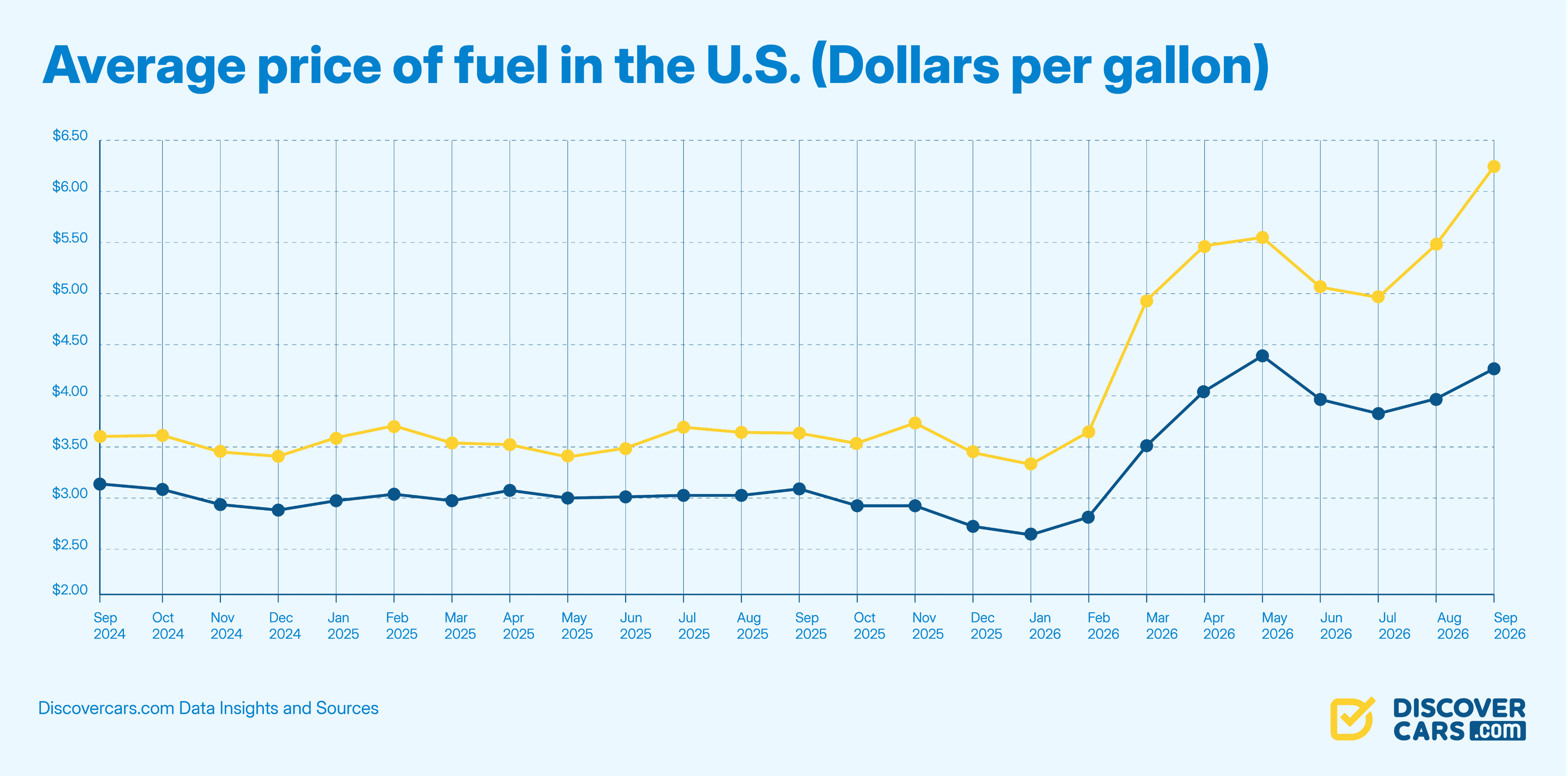
In the US, the price of regular gasoline has risen by 35% from $3.11 per gallon in September 2024 to $4.21 in September 2026. Meanwhile, diesel – already more expensive – has risen much more steeply than gas, as the average price in September ($6.23) was an eye-watering 77% higher than what it was in September 2024 ($3.55). Changes like this can make budgeting for fuel much more difficult, as the money simply doesn’t go as far.
Using September 2026 prices as a benchmark, a small car with a 12-gallon fuel tank would cost $50.40 to fill up with gas, while an 18-gallon SUV would cost $75.60. However, if you have a heavy-duty truck that uses diesel, filling up with 36 gallons would cost $224.28.
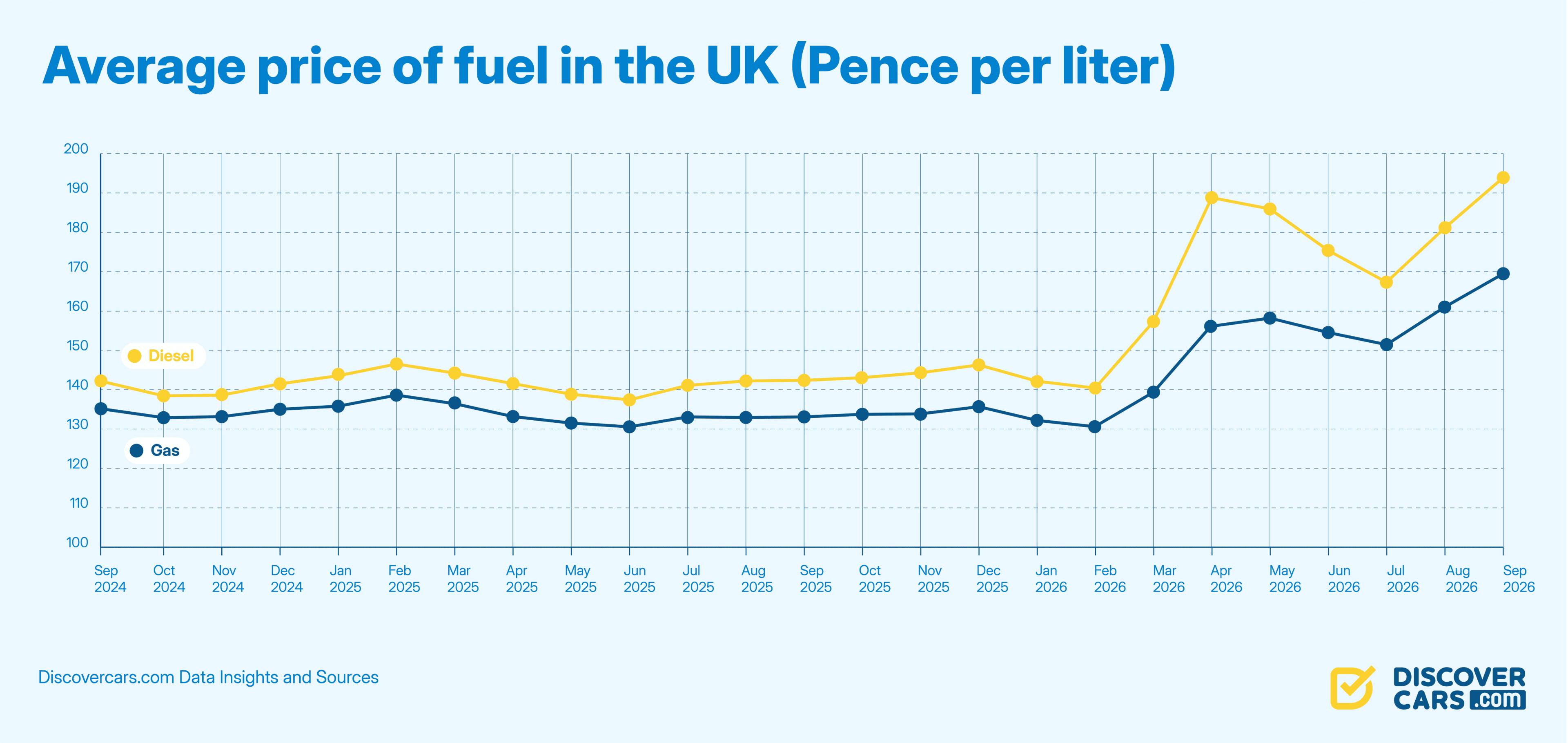
Meanwhile, in the UK, gas increased 24% from 136.8 pence per liter to 169.50 pence per liter over the past two years. Similarly to the U.S., the cost of diesel has gone up significantly more, although not quite as dramatically. It has risen by approximately 36%, from 141.8 pence per liter in September 2024 to 192.6 pence per liter as of September 2026.
If you have a smaller car that holds 45 litres, a full tank of gas at average prices for August 2026 would cost £76.28, while the same amount of diesel would cost £86.67. An SUV that holds 70 litres would cost £118.65 to fill with gas, with diesel drivers forking out a whopping £134.82.
So it’s clear to see fuel prices have been on the rise – with diesel rising particularly dramatically. How much are drivers feeling the impact? The highest percentage, at 30%, said they’re feeling the pinch a little, while 25% have been impacted “somewhat.” Just over a fifth of drivers, 21%, told us they’re affected “a lot” – but on the other hand, slightly more, 23%, said they aren’t impacted by it “at all.”
We wanted to know how people are responding to the high cost of fuel, and whether it’s led to any changes in their behavior and habits. 51% of drivers in our survey felt they needed to make a change of some kind, while 49% didn’t. That lines up roughly with the 23% who said the price of fuel wasn’t bothering them, along with the 30% who said it was only affecting them “a little.”
So what kinds of changes are people actually making? Our survey broke this down into two categories: how they drive, and how they travel in general. We asked drivers to select every option that applied to them.
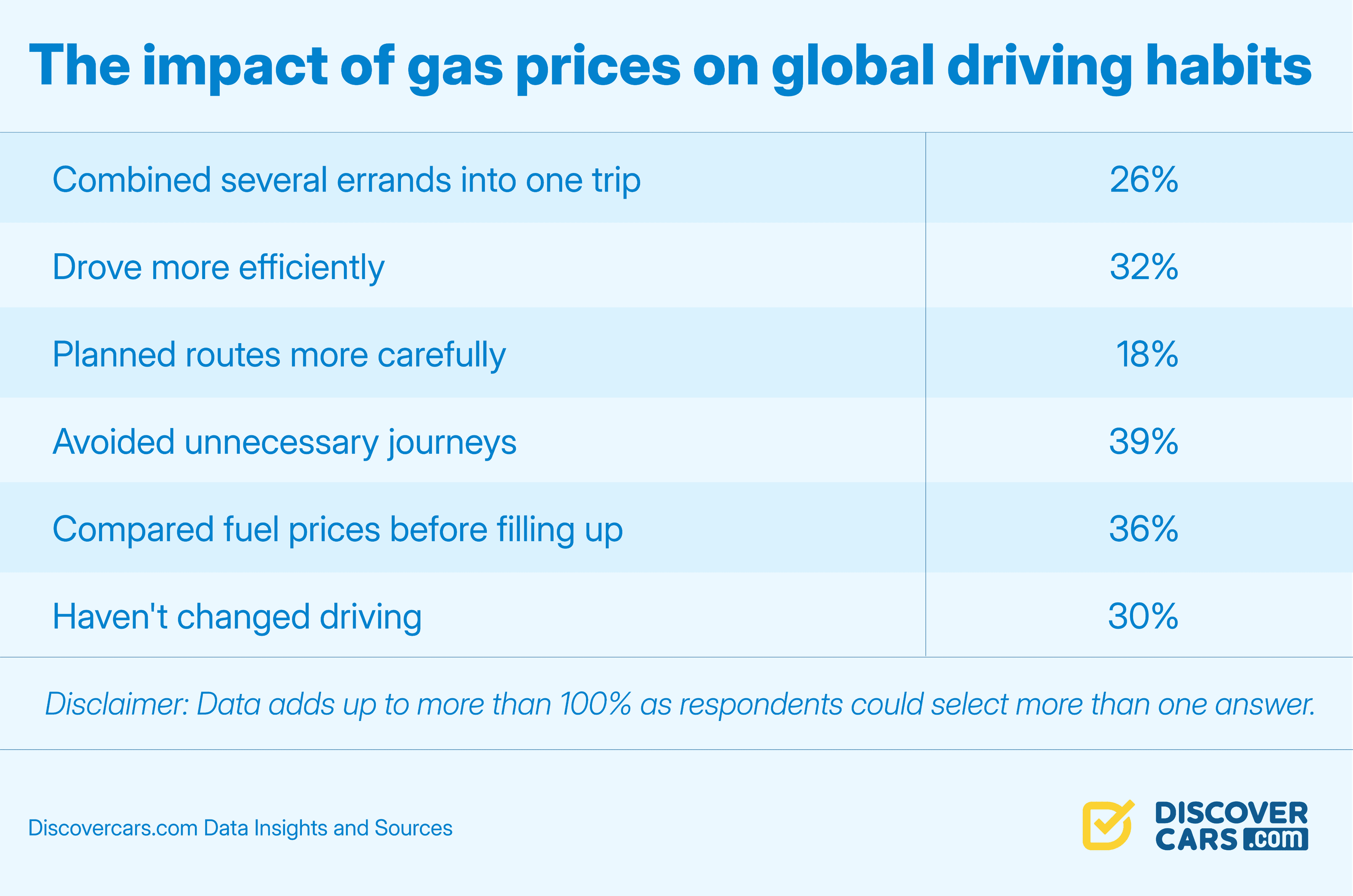
In terms of changes to their driving, the most common response was that 39% of our survey respondents are avoiding unnecessary journeys, followed by 36% who carefully scope out the best fuel prices available before they choose where to fill up. 32% were making an effort to drive more efficiently, along with 26% who shared that they were combining several errands together into one trip. 18% told us that they were planning routes more carefully to help cut down their spending on fuel. However, this leaves nearly a third, 30%, who told us their driving habits haven’t changed.
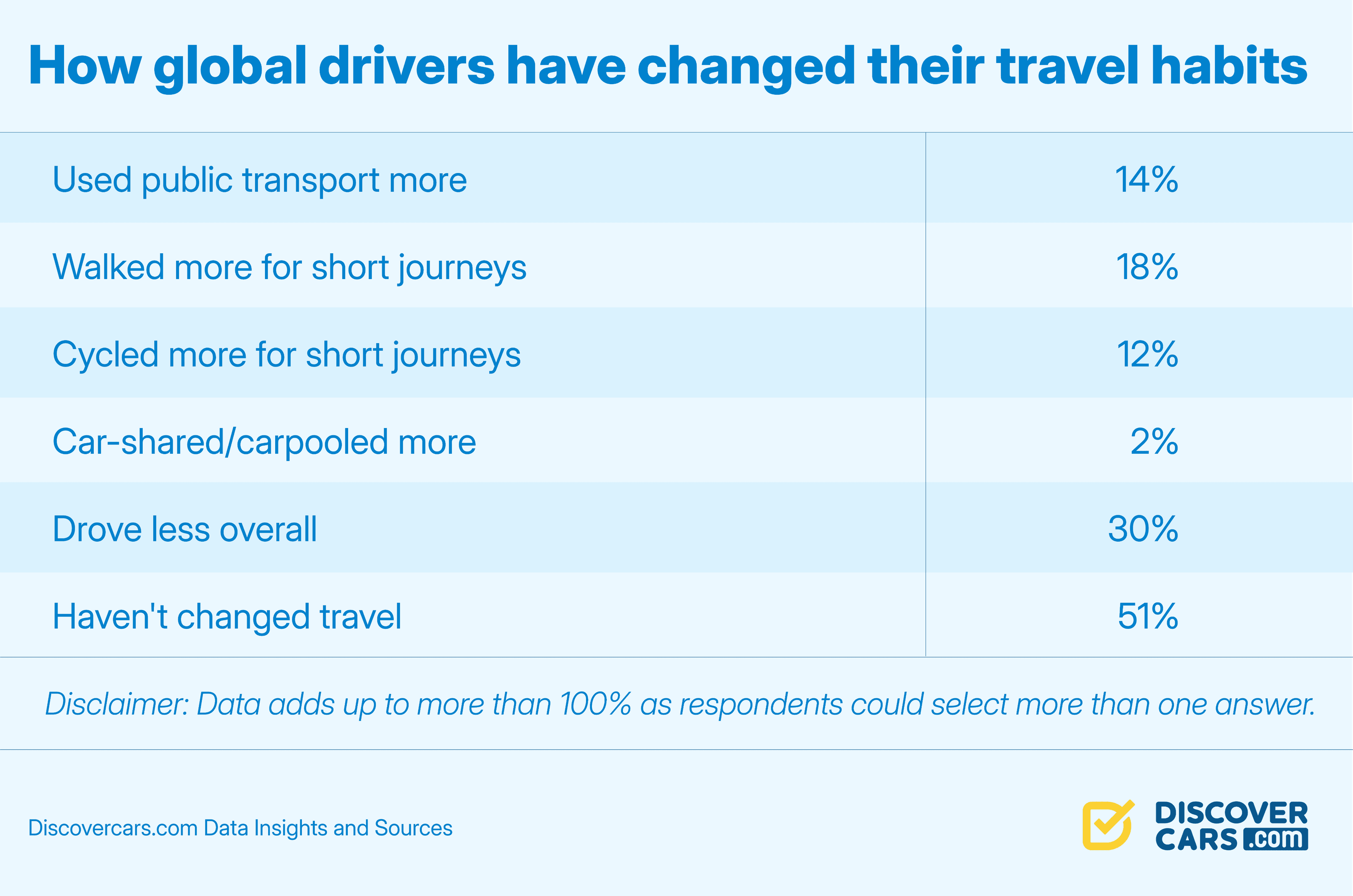
And looking at overall travel, plenty of people also told us they’re using alternate modes of transport to save money on fuel. Overall, 30% of our survey respondents drove less. 18% walked more for short journeys, with 14% turning to public transport more often. 12% were swapping their car for a bike for short distances, while a small minority at 2% were carpooling more often. This might be because for carpooling to be practical, you need someone to travel with who’s going roughly the same direction at the same time – and you also need to trust your fellow carpoolers to hold up any promises to pay for fuel. This leaves 51% who said they hadn’t changed the way they travel.
We also wanted to understand how fuel prices might be impacting what car people drive — so first we asked our survey participants to tell us what kind of car they drive right now. The biggest percentage drive a car that uses gasoline at 47%, while 28% drive a car that uses diesel – the group of drivers who will have seen their expenses increase the most.
There are 14% who use a hybrid car (with 10% opting for a traditional hybrid and 4% driving a plug-in hybrid car that can travel much further on electricity alone). Fewer than 1 in 10 currently drive a fully electric car (8%), while 2% told us they don’t often drive. These are probably the customers who rent a car when they travel, but don’t own one of their own.
Although many people tend to feel attached to the type of car they drive, given the high cost of gas and diesel, you might predict that some people would be open to switching to a car that either uses less gas or doesn’t use it at all. Just under half of our respondents said they’d either consider a new car or had already switched, at 43%.
15% said they were considering a hybrid vehicle, while 9% had already swapped to this type of car. While 7% had switched to an electric car, a further 8% were considering getting one. 4% were thinking about getting a new car that still used gas or diesel, but had a more efficient internal combustion engine (ICE) that could achieve more miles per gallon. However, for 52%, changing their car wasn’t on the agenda. 5% didn’t respond or said this question wasn’t applicable to them.
Overall, the high cost of fuel is influencing the decision-making of many of our customers who filled in our survey, whether they’re reducing the amount of driving they’re doing or even thinking about switching to a new car.
We hope you’ve found this article interesting. If you’re looking to rent a car for your next trip, we hope you consider booking with us. We were the most visited global car rental comparison site in February 2026 and can help you find the perfect rental car in 164 countries around the world, with a wide range of cars available, whether you’re looking for one with a traditional combustion engine, a hybrid or an electric vehicle.
From renting an electric car in Norway to exploring city centers on foot, here are some ways to keep fuel costs down when visiting these popular destinations.