
The DiscoverCars.com SEO Growth Team made it to the final of the European Search Awards 2026
AwardsIndustry News
Google has finished rolling out another update. Have you noticed any differences on your website recently? We previously covered several core algorithm updates, including the November, December, March, and June updates. This time, we’ll be analyzing the results of a spam update, which is different from a core update (more on that below), but ultimately serves the same purpose of improving the quality of search results.
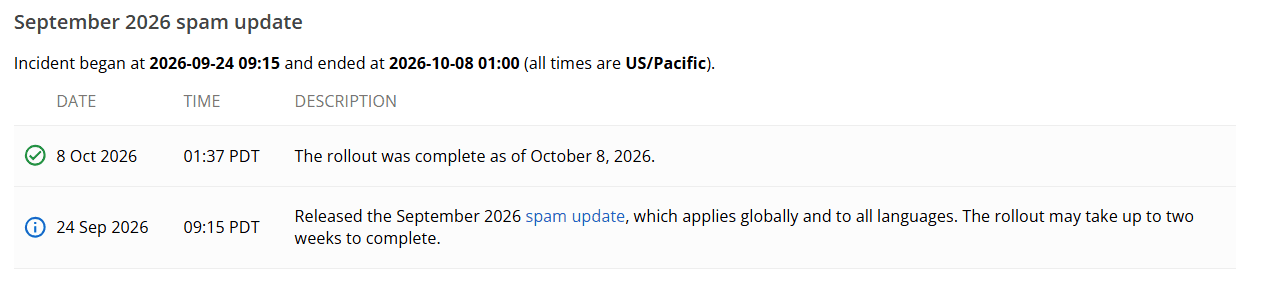
The September 2026 Spam Update started on September 24 and finished rolling out on October 8. It applied globally and to all languages, meaning that websites across different niches and locations could have been affected.
Did this update create major changes within the travel blogging niche? Are there any clear similarities between the winners and losers? We will share all the data, conclusions, and practical advice below.
Although both core and spam updates can cause noticeable changes in organic traffic, they don’t have exactly the same purpose.
A Google core update is a broad change to Google’s ranking systems. Its purpose is to improve the overall quality and usefulness of search results. Core updates don’t target specific websites or individual pages. Instead, Google reassesses content across the web, which means that a website can lose rankings even if it hasn’t done anything wrong—another website may simply be doing a better job of meeting users’ expectations.
A Google spam update, on the other hand, improves Google’s automated systems for detecting content and practices that violate its spam policies. One of these systems is SpamBrain, Google’s AI-based spam-prevention system, which is designed to identify new and evolving attempts to manipulate search results.
As with our previous analyses, we used Ahrefs to compare the estimated monthly organic traffic of travel blogs before and after the update. We selected September 23, the day before the rollout started, and October 9, the day after it finished, to create a consistent comparison period for all websites.
After comparing the traffic data, we calculated the percentage change for each blog and performed an on-page and technical analysis of the most significant winners and losers. We then looked for recurring patterns and assessed how they relate to Google’s spam policy.
Disclaimer: it is important to remember that Ahrefs provides third-party estimates rather than first-party Google Search Console data. If you are trying to figure out whether your website has been affected by this update, we recommend checking your own Search Console before and after the rollout. Google has also recently made third-party search-result scraping more difficult, rank-tracking tools may contain delays or gaps, and the results in this analysis should be treated as estimates.
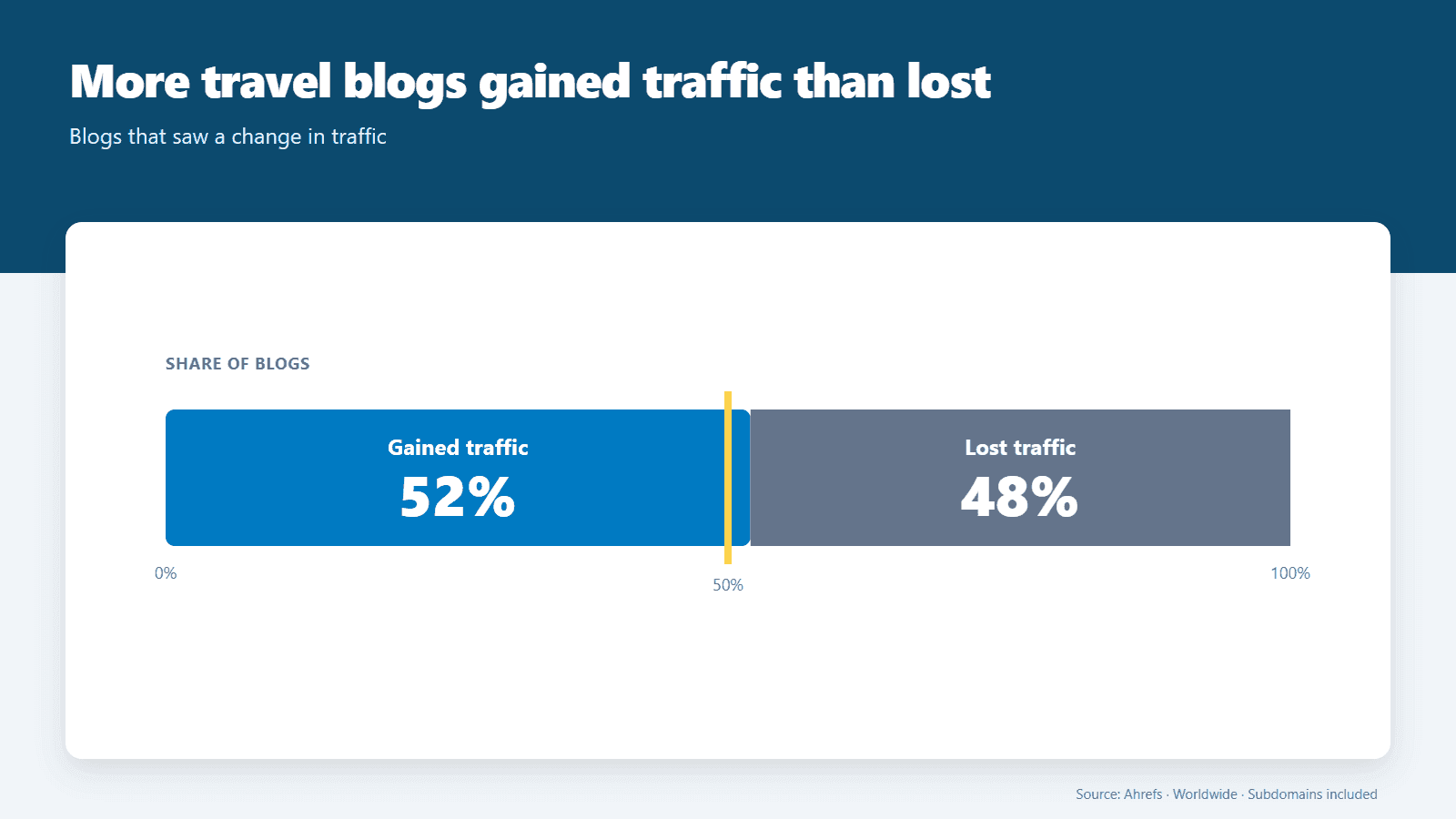
The first encouraging finding is that slightly more travel blogs gained traffic than lost it. Of the 178 blogs we analyzed, 91 saw their estimated organic traffic increase, compared with 84 that experienced a decline.
Although this is a small difference, it shows that the September Spam Update was not universally negative for travel bloggers. Still, some websites experienced considerable losses, so we’ll be sharing tips on how to recover from a spam update at the end of this article.
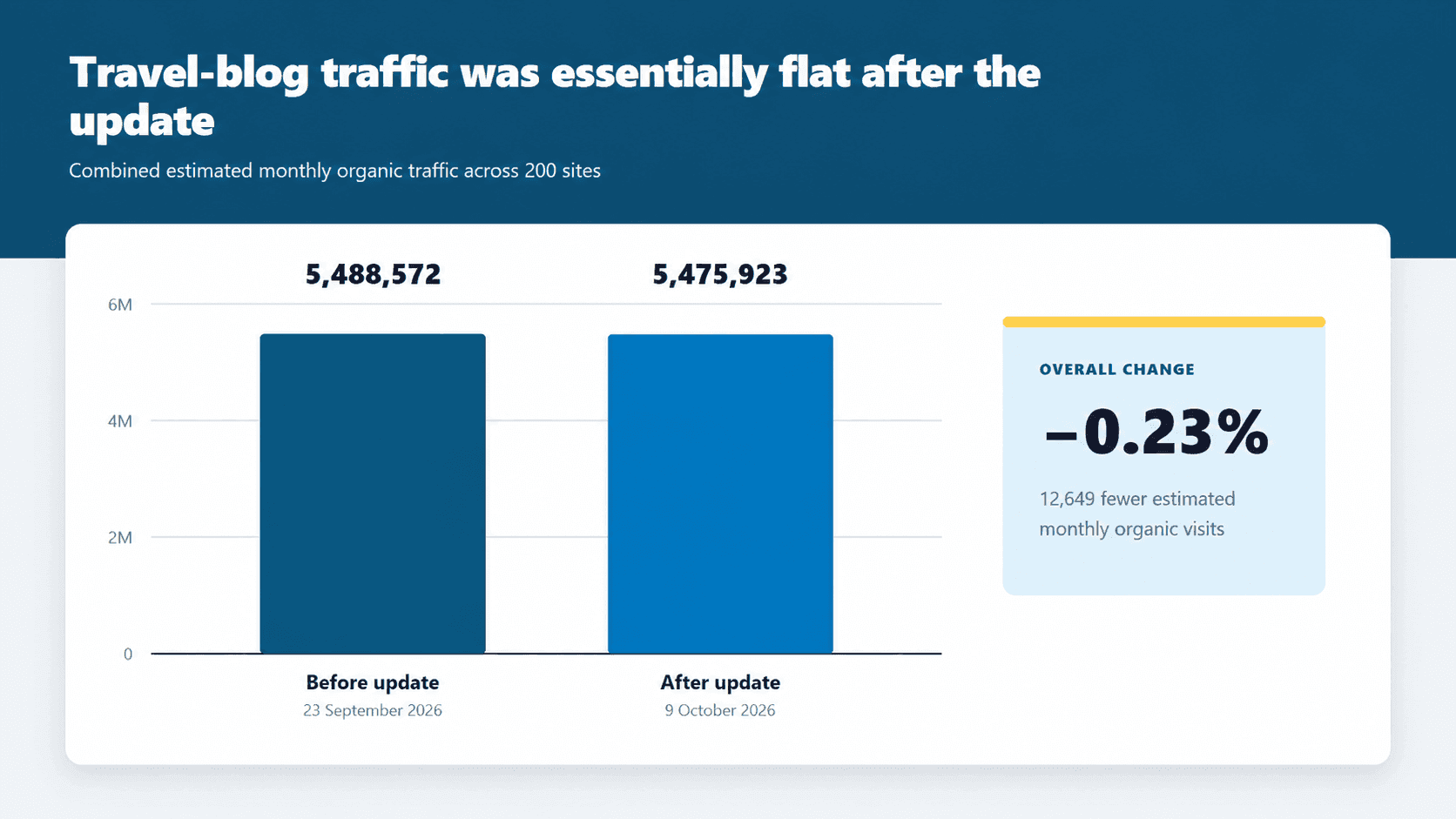
Though we did see some big changes for individual blogs, the overall traffic of all the websites in our study remained almost unchanged.
Before the update, the blogs received around 5,488,572 monthly organic visits. After the update, this fell slightly to 5,475,923—a decrease of just 0.23%.
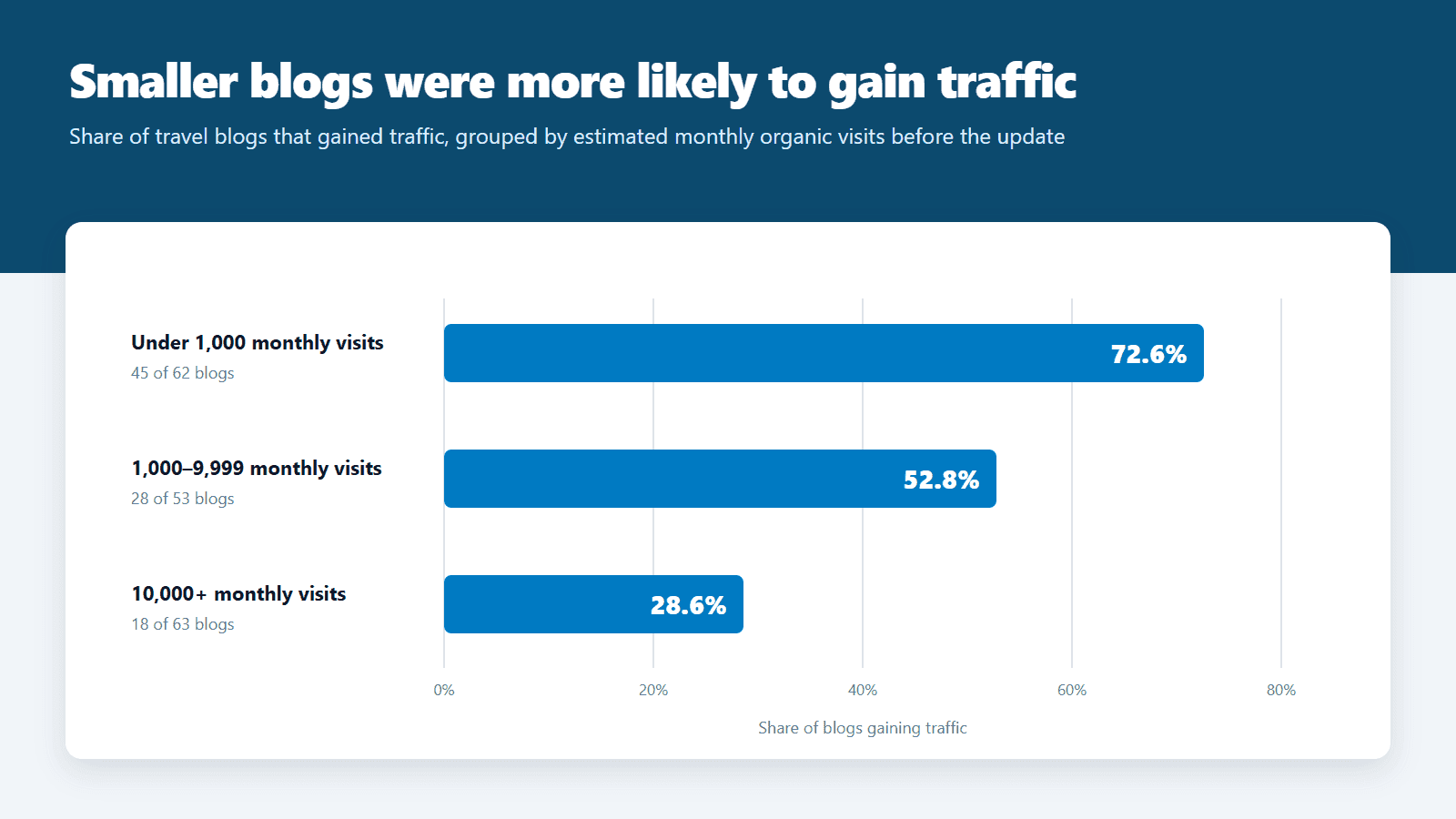
One of the clearest patterns we noticed was that smaller travel blogs were more likely to gain traffic than larger ones.
Among blogs that started with fewer than 1,000 estimated monthly visits, 45 out of 62—or 72.6%—gained traffic. This fell to 52.8% for blogs receiving between 1,000 and 9,999 visits and just 28.6% for those with 10,000 visits or more.
Although it is important to remember that large percentage increases are easier to achieve when starting from a low baseline, we’d say that this is definitely good news for smaller bloggers. In fact, almost three-quarters of the smallest blogs in our study experienced an increase.
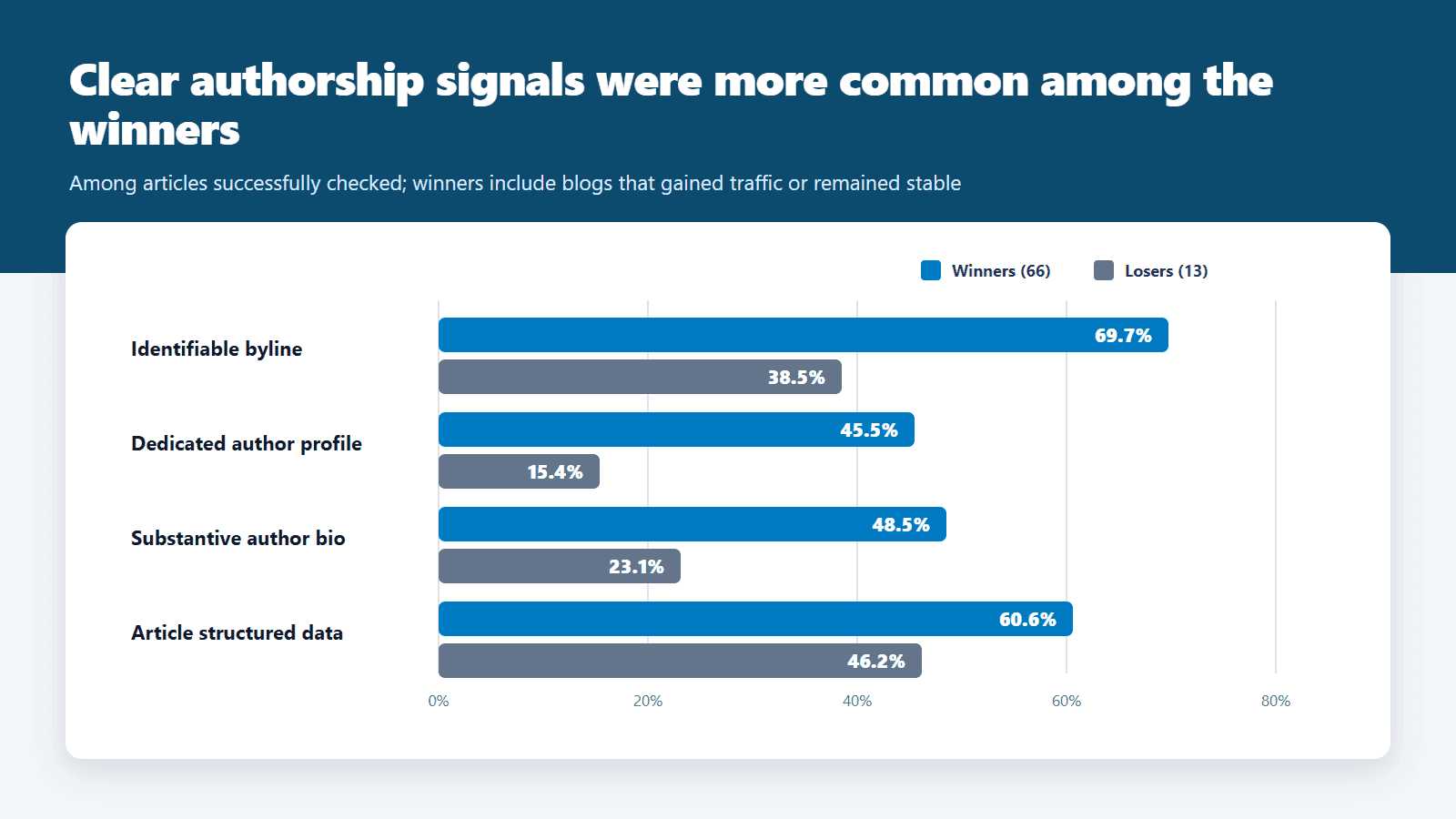
Of all the patterns we identified, the difference between winning and losing websites was the biggest in terms of how they handled authorship.
Here’s what we found:
Interestingly, this is not the first time we noticed that authorship matters in an update. While all the previous times this was due to a core update, it makes sense that it showed up again after a spam update too. As Google mentions in its spam policies under site reputation:
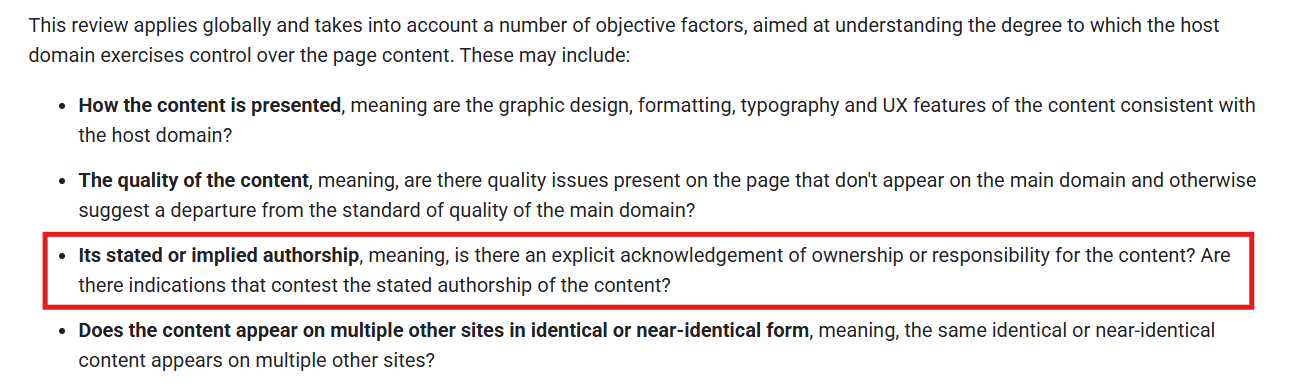
We’ll be dedicating a separate section with practical advice on how exactly you can apply this to your blog below.
We also noticed that winning pages tended to be more transparent about their commercial relationships.
This is what we found:
This is also clearly stated in the spam policies documentation where Google acknowledges that advertising or sponsorship is a normal part of the economy, but requires such links to be qualified with a rel="nofollow" or rel="sponsored" attribute.
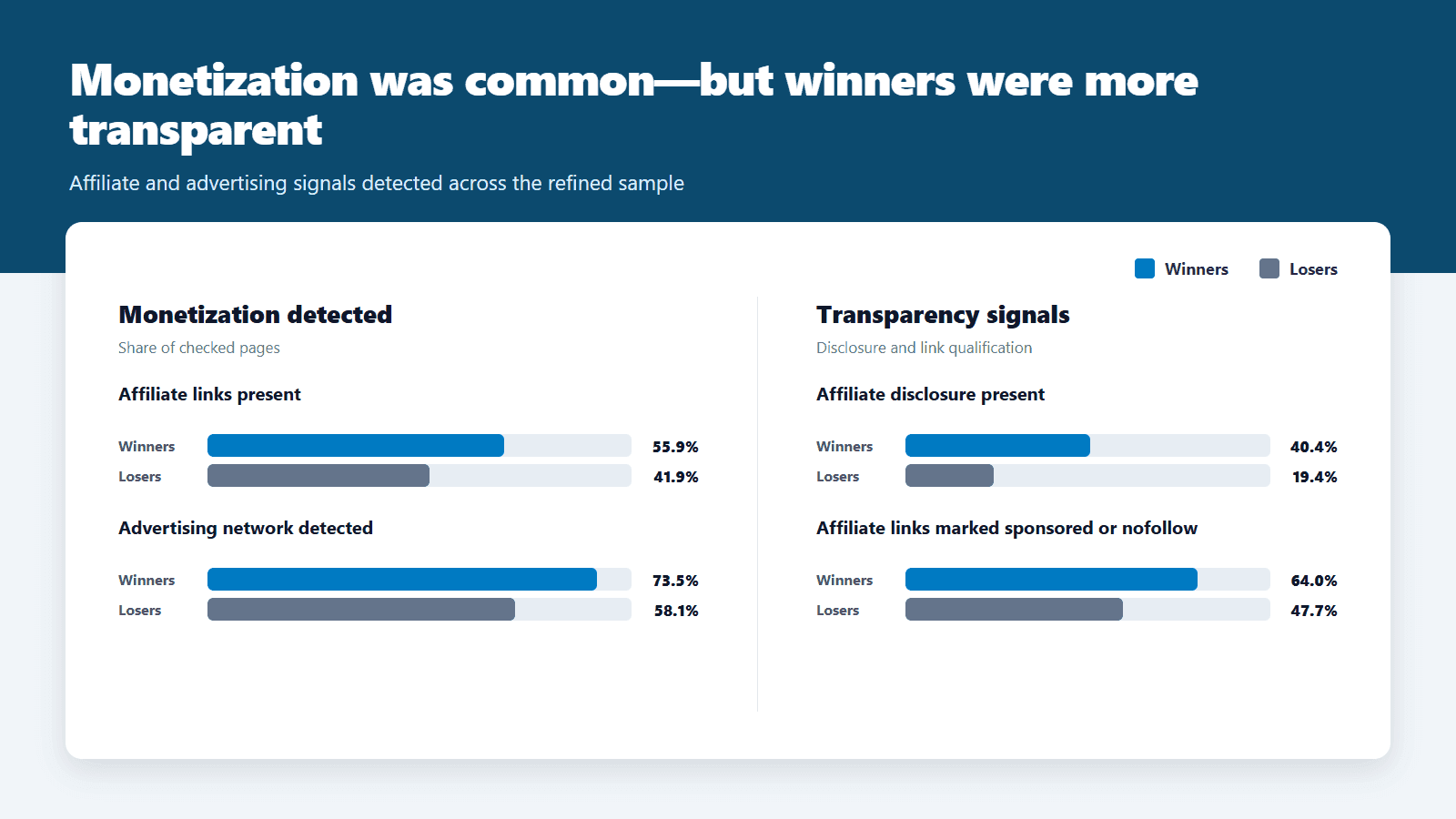
One reassuring finding for travel bloggers is that monetized pages were not more likely to lose traffic. Quite the opposite, affiliate links and advertising were actually both detected more frequently on winning pages.
We found the following:
The same patterns show in advertising:
This also doesn’t mean the opposite, that Google was deliberately rewarding monetized websites. It simply shows that what matters most is how monetization is handled, not that it is there in the first place.
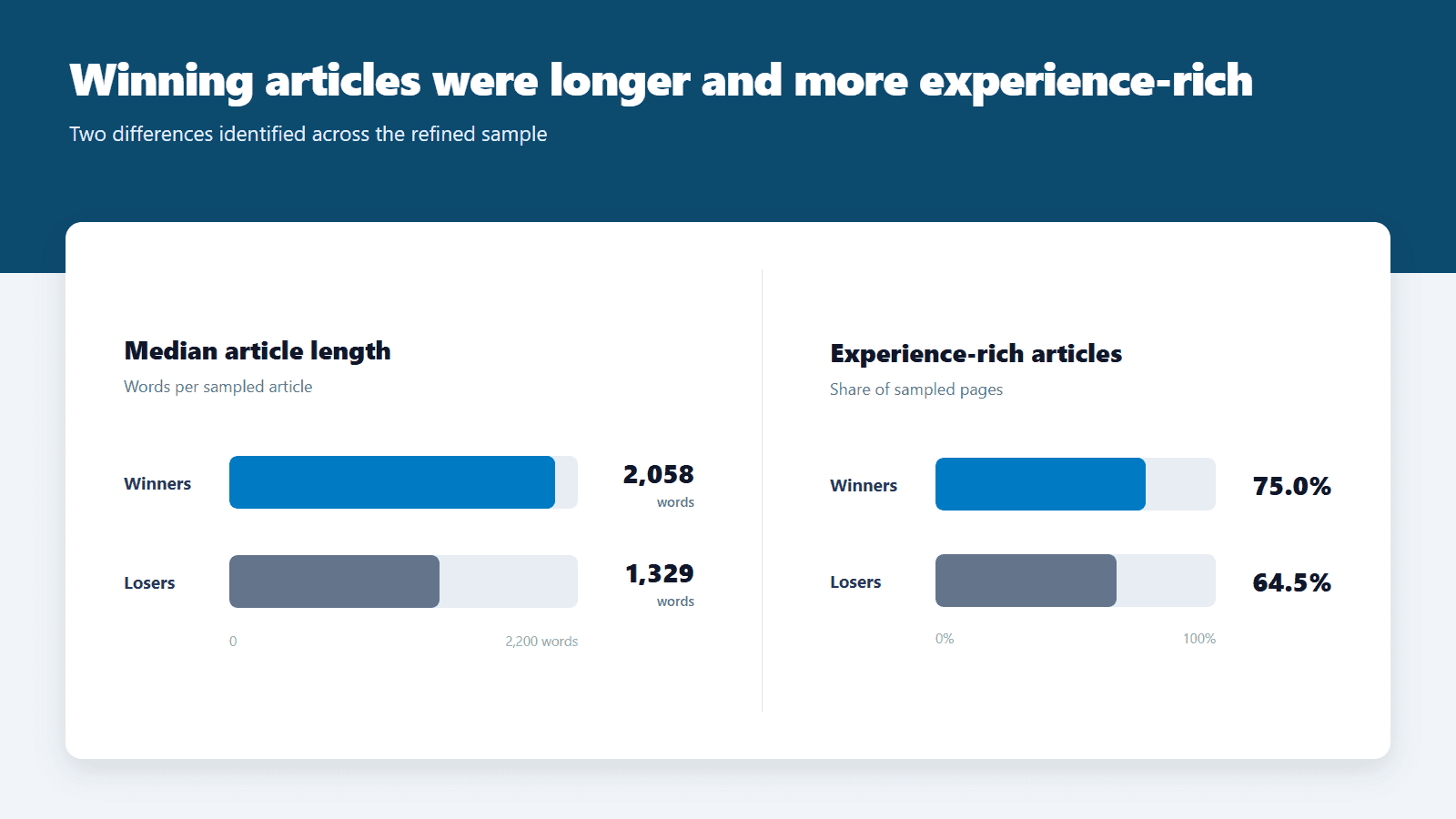
Another difference we noticed was that winning articles tended to be longer and show more signs of first-hand experience (used phrases such as ‘’we visited’’, “I stayed’’ etc.).
This, however, should be taken with a grain of salt. Just because an article is longer doesn’t mean that it’s necessarily better. The finding above simply suggests that the winning articles had more opportunities to share more quality content, not that the extra words were used just for the sake of length.
First-hand experience was more common among winners, but several losing articles also contained pretty strong original work.
One losing article included a detailed personal account, original photography, practical technical advice, a named author and a substantive biography. Another documented extensive original travel and first-hand testing, yet unfortunately the website still lost traffic.
This doesn’t mean that first-hand experience doesn’t matter (quite the opposite). It could just suggest that Google was simply not focusing on this area in this particular update.
One of the more surprising findings was how common apparently automated spammy backlinks were among both winners and losers. These are usually created without the website owner’s involvement by low-quality and malicious websites.
We analyzed the backlink profiles of 16 losing websites and 16 similarly sized winners:
This is quite reassuring for bloggers who notice strange links appearing in their backlink profiles. Disavowing links in Search Console was once a more common SEO practice, though nowadays Google has gotten smarter mainly thanks to SpamBrain, its spam prevention system. However, this is quite different from deliberately participating in link schemes, which should still be avoided, as Google can tell the difference.
Since authorship has emerged as one of our strongest findings, we are dedicating a whole section to tips on how to make sure your website’s aligned with this particular policy.
Add a named byline to every article. Use the author’s real name rather than “Admin,” “Editorial Team” or the name of the website.
Link the byline to a dedicated author page. The author page should tell us more about the person behind the content.
Make author bios specific. Mention destinations the author knows well, how long they have been travelling etc… Simply saying “passionate about travel” provides very little background.
Include a short bio on the article itself. This one should be shorter than the author bio on author pages, but still include relevant information.
Show evidence of the author’s work. Make sure there are links to social profiles, books, media appearances, awards etc.
Keep authorship information consistent. The name in the byline, author profile and article structured data should refer to the same person.
Distinguish between writers and reviewers. It would be best to explain each person’s role. If an article was written by one person but fact-checked or reviewed by someone else, make sure to have it state just that.
Show your experience: Include original photographs, personal observations and practical details. Try and always ask yourself what could make your experience stand out and be different from another (especially generic) one.
Review similar articles together: If you have many destination or affiliate pages following the same template, check whether they contain enough unique information. Just changing the location name while keeping the same template doesn’t provide useful information for a reader.
Don’t be afraid to monetize: Affiliate links and advertising were common among winners, so monetization itself was not the problem. What you should pay attention to is that you’re clearly stating you’re labeling sponsored content.
Be transparent: Clearly disclose commercial relationships and mark affiliate links as sponsored or nofollow.
Quality still beats quantity: Make sure you’re covering a topic comprehensively, but don’t just add words for the sake of it.
Don’t panic about automated backlinks: As you could see above, strange unsolicited links affected both winners and losers, so avoid making drastic changes based on them alone. However, we strongly advise against buying links or participating in link schemes to manipulate rankings.
Analyze individual pages: If you lost traffic, compare the pages that declined with those that remained stable or gained instead of looking for one site-wide explanation.
Make changes page by page rather than deleting content in bulk: Identify patterns among the pages that lost traffic, then improve the pages that genuinely lack originality or transparency.
Most importantly, don’t rely on one signal alone: We noticed that first-hand information alone didn’t seem to make a difference this time around, but that doesn’t mean it doesn’t matter. Always focus on creating genuinely useful content, rather than optimizing for one winning factor only.